Khorasan
Fri Jun 13 '25
I use flour to bake bread every week. Last year, I ran out of flour. I went to the flour store to get a bag of rye. They didn’t have rye, so I walked out with a 50lb bag a flour called khorasan.
I never got around to taking pictures of the flour, but it looks and feels a lot like sand. Apparently, because it’s a very hard grain, milling results in a coarse flour. So it’s more grainy than regular powdery wheat flour and a bit more fine than termite droppings.

Before I forget, here are my ingredients for a 1.6 kilo dough.
I use 35% rye, 35% khorasan, and the remaining 30% mostly regular wheat flour with a bit of vital wheat gluten to strengthen it. You are probably safe using a bit less gluten than what is listed. And using a bit more salt to balance out the high hydration if you like. The final dough is 94% hydration but that might be a little on the lower side.
I bake it in an electric convection oven at 245°C (473°F) for fifteen minutes then 220°C (428°F) for about another fifteen or twenty minutes. Basically, at the higher temperature until the crust looks how I want, then the lower temperature to ensure the bread is in the oven for a total of thirty or thirty five minutes or whatever it needs for the inside to not be underdone.
I use a rye sourdough starter with 200% hydration.
starter |
grams |
|---|---|
total |
245 |
total flour |
82 |
rye |
82 |
water |
163 |
final dough mix |
grams |
|---|---|
total |
1633 |
total flour |
831 |
rye |
209 |
wheat |
212 |
khorasan |
291 |
vital wheat gluten |
38 |
salt |
21 |
water |
618 |
starter |
245 |
You can view the baker’s formula in full with baker’s percentages here.

Khorasan doesn’t get stretchy like a typical flour does from its gluten. Like sand, it clumps together a bit when wet, but doesn’t stick or gloop to itself much. Like rye, it absorbs a lot of water and doesn’t have much strength. Even though this makes rye and khorasan more difficult to make dough with, rye at least makes up for it by being delicious.
Before I bought the khorasan, I briefly checked some websites using my telephone to confirm that it is indeed used as an ingredient for baking bread – to ensure I wasn’t inadvertently buying a bag of animal feed or a substance meant for the creation of cement or rammed earth. But I did not appreciate the extent people will go to bake with any and all kinds of false idols. The unorthodoxy of the gluten free baking movement makes this very clear. Just about anything can be ground into a flour and used to bake bread. Corn, almonds, oats, root vegetables, legumes. Anything.
Science tells us this about the taste of khorasan.
… [khorasan] kernels are twice the size of wheat kernels with 20-40 percent more protein, higher in lipids, amino acids, vitamins, and minerals and characterized by a hump shape, but it is best known for its distinctive nutty, buttery flavor.
After fifty pounds of doing my own research, I’m concluding that science is wrong on this one. And that its flavour is yet another strong similarity that khorasan has with sand. And there is nothing either nutty nor buttery about sand.
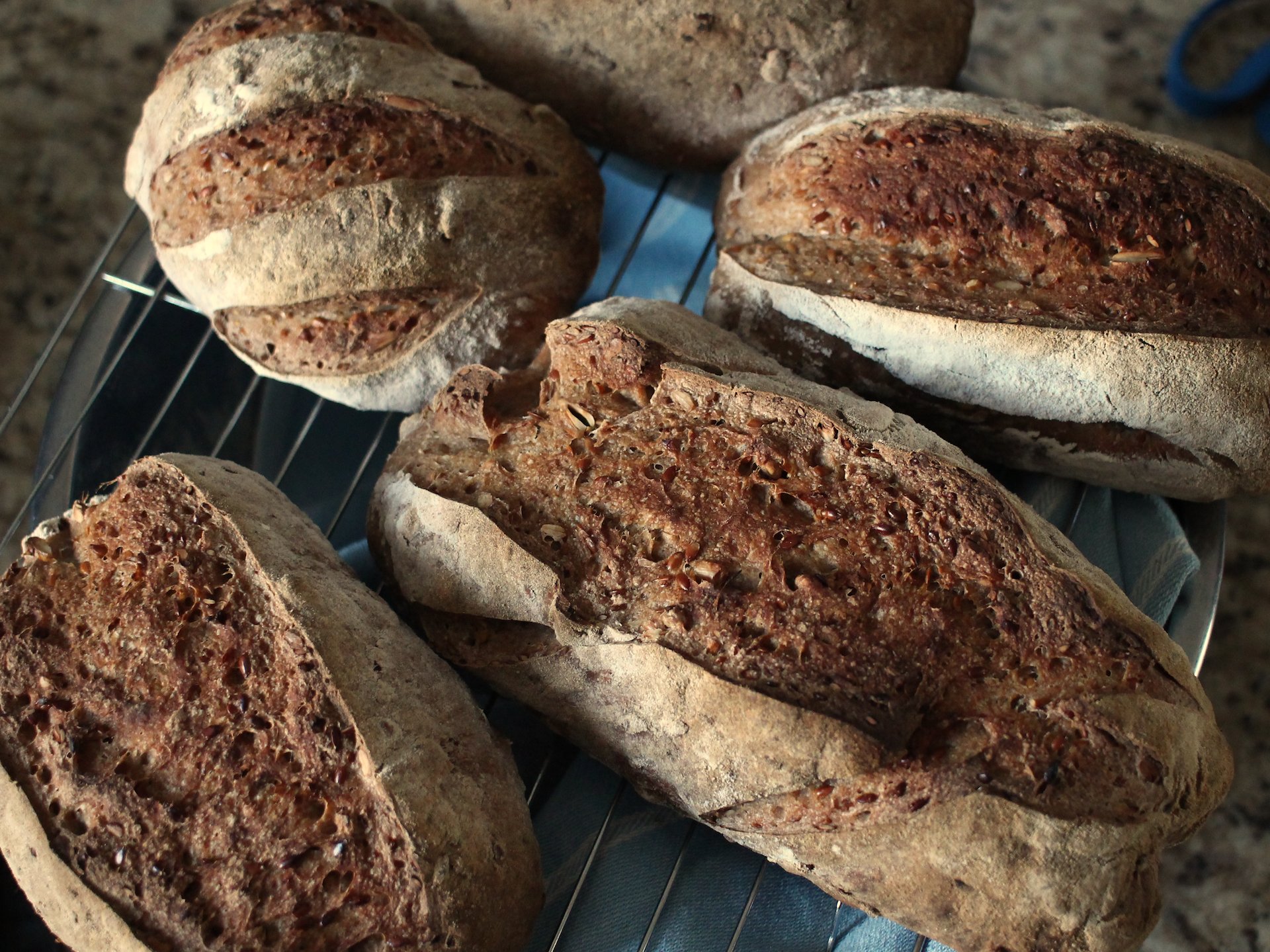
What are we to do when a scientific journal would have us believe that khorasan has a flavour that it does not have? What do we do when we can’t trust the science? How do we make the right choices when the institutions are so fallible? When the value we have for Creation is its price? When more money I will ever see has been spent just trying to get me to use Microsoft Edge? When the trust that we build this world on is based on the astrology of GitHub stars? When the stories we told each other in our youth and committed to heart are fed to Demon Factories? When we see reality replaced by tweets, tiktoks, and advertisements? What are we to do when only commodities are real and when truth becomes surreal?
If anything can be flour, then anything can be bread.

If anything can be bread, what makes bread anything?
The baker, the alchemist, would tell you of their ritual, thousands of years old, to transmute bread from grain, grass, seed, or sand, with the primordial elements of heat and time. They would speak of the sound and scent, from the fruity ferment to the bold caramel bellow of a freshly baked loaf that tingles the ear with a whispering rolling crackle. Of its structure – the holes, the nothingness themselves, giving form within the crumb to shape the crust; as a song where the rests are every bit important as the notes.
Yet, as poetic as they may be for their passion, do you really believe them?
I don’t.
Not anymore than I believe that khorasan is nutty or buttery.
Bread is how you feel inside.
